

新闻资讯
NEWS
Take stock of common clams
2023-07-17
Clams, aliases: clams, are mollusks in the ocean, two shells enclose the flesh, living in the ocean, within 100 meters of the sea depth of the tidal zone. To date, nearly 200 species of shellfish have been found worldwide.
As an economical and delicious seafood shellfish, it has always been loved by diners all over the country. In coastal areas, clams, as an economical small seafood and a home-cooked dish, appear on the tables of ordinary people almost every day, satisfying the taste buds of seaside people.
In mainland cities, clams are called "flower armor", and there has been a lot of craze for eating clams, for example, in Suzhou, Wuxi and other places, many "flower jia" shops specializing in eating clams, "secret flower armor", "tin foil flower armor", "flower jia noodles"... and other dishes with clams are popular with diners.
Since clams are so delicious, and there are so many varieties, what varieties of clams are we usually common and often eat? What are their characteristics? Today I will list 10 species, the more common and delicious clam varieties along the coast of China, if you like it, please collect it quickly! You can use it to eat seafood in the future!
1. Wen clam
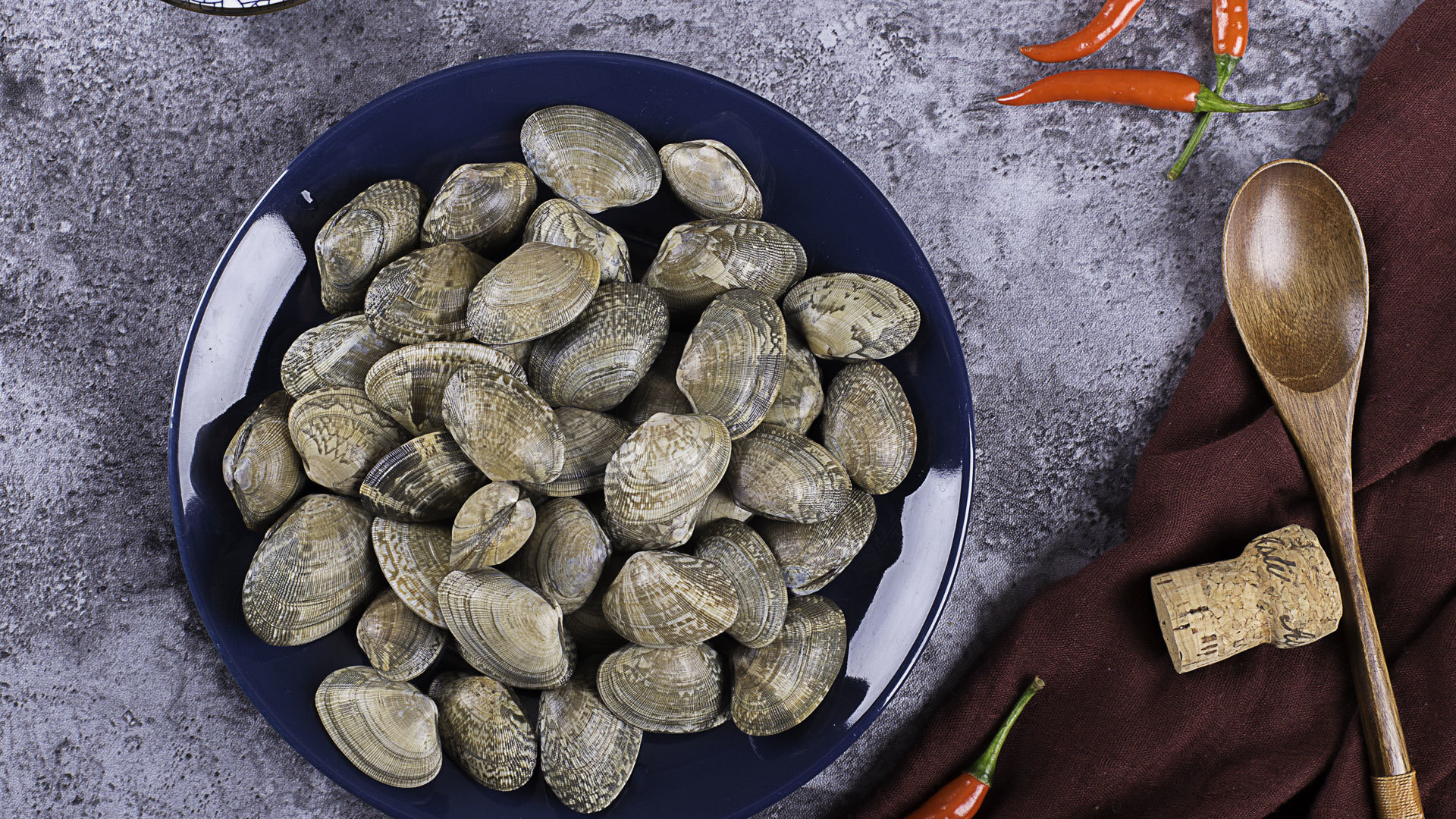
Wen clam, also known as slippery clam, slippery clam. Named for its smooth surface and beautiful red, brown, black and other color patterns, it is one of the important edible shellfish. Native to Japan, it is distributed in the Korean Peninsula and China, and there are also marine aquaculture clams along the coast of Taiwan.
The skin of the clams is relatively thick, the size is large, the largest body size can grow to about ten centimeters in diameter, and it is often seen in seafood markets in coastal China, and is one of the shellfish commonly eaten in coastal areas.
The meat of the clams is very delicious and tender, making it one of the most delicious clams in the shellfish. Rich in protein, calcium, magnesium, potassium, iron and other trace elements, very nutritious. In China, there has been a history of eating clams since ancient times. In the Tang Dynasty, it was once listed as a sea treasure tribute for banquets in the imperial palace.
How to eat clams: boiled soup, spicy stir-fry, eat hot pot, steamed eggs with clams.
2. White clams
White clam, scientific name four-horned clam, is a common economic shellfish along the coast of China, the shell is thick, slightly quadrangular, the top of the shell is white. It is widely distributed in China's coastal areas, and the output is also very large, with Liaoning and Shandong as the most.
White clams are tender, delicious and nutritious. The shells are relatively thin and the meat yield is relatively high. It has high economic value. Coastal areas often dry white clam meat to make "jerky clams", which are sold as a local specialty and can be used for cold mixing, soup, or direct consumption.
White clams have many uses, white clam meat is salty and cold, in the Chinese medicine dictionary, it has the effect of nourishing yin, water and phlegm. Even the ground powder of its shellfish has the effect of clearing heat, relieving moisture and dissolving phlegm.
How to eat white clams: boiled soup, spicy stir-fry, jerky with clams.
3. Clams
Clams, scientific name Ring clams, belong to medium-sized shellfish, mostly distributed in the waters of China and Japan, and are one of the important economic species of aquaculture. The shell is yellowish brown in color, but has purple on the outer edge and a purple ring around it, hence the name red-billed clam.
The shell of the clam is nearly round, the inner surface of the shell is milky white or bluish white, and it is very smooth. The weight is very light, but the texture is hard, relatively brittle, and the layer lines are not obvious.
Clams are sold relatively little in the market and are not expensive. The taste is somewhat similar to white clams, relatively thick, tender and juicy, and the nutritional value is comparable to white clams, which is a relatively delicious shellfish.
How to eat clams: boiled soup, spicy stir-fry.
4. Hairy clams
Hairy clams, also known as hairy clams, hairy clams. It is a common shellfish in the waters of northern China and is widely distributed in the waters of China, Korea and Japan. It is most common in the Yellow Sea and Bohai Sea areas of China.
There are a lot of hairs on the shell of the hairy clam, so it is vividly called "hairy clam", the meat is delicious and juicy, the taste is tough, the more chewed the fresher, the high content of various trace elements, rich in nutrients. It is known as "red shell" in Korea, and Korea prefers to eat raw clams.
The appearance of the hairy clam is somewhat similar to the blood clam, but the size is larger than the blood clam, and there are more villi, although there is also red sap, but it does not have the "bright red" color of the blood clam, but a darker brownish red. There are also differences in taste, with clams being more tough and chewy. In the north, in addition to direct cooking, clams are also used to make cold dishes, which is a very delicious appetizer.
How to eat hairy clams: plain boiled, ginger clams, steamed clams, hairy clams mixed with spinach.
5. Blood clams
Blood clam, aliases: blood snail, qui cockle. The shell of the blood clam is thicker, the body size is more swollen, and the shell has obvious vertical stripes, showing radial ribs, which are somewhat similar to the hairy clam. Marine fish mainly living in the South China Sea in the East China Sea is a specialty of coastal waters such as Zhejiang, Fujian, Guangdong and Hainan.
The body fluid of blood clams contains heme, which is red, and red soup will flow out when eaten, so it is figuratively called blood clams. The meat of blood clams is very tender and juicy, and the delicious taste attracts many die-hard fans to eat it. In order to have the best edible taste, more boiling water is used to rinse the method, and the slight opening is immediately fished out to ensure that the "blood" juice of the blood clam is not lost, and the taste of the fresh and tender juice is eaten.
Raoping YuXiang Aquaculture Co.,Ltd.
Tel:
Add:
Industrial district,Jingzhou Town, Raoping County,Guangdong Province ,China
E-mail:

-Scan QR code-